Selling a Deceased Parent's Library
A practical, unhurried guide to a parent's books: what to keep, how to find the few that are valuable, and the simplest ways to sell or donate the rest.
Cub McKinnon
Author
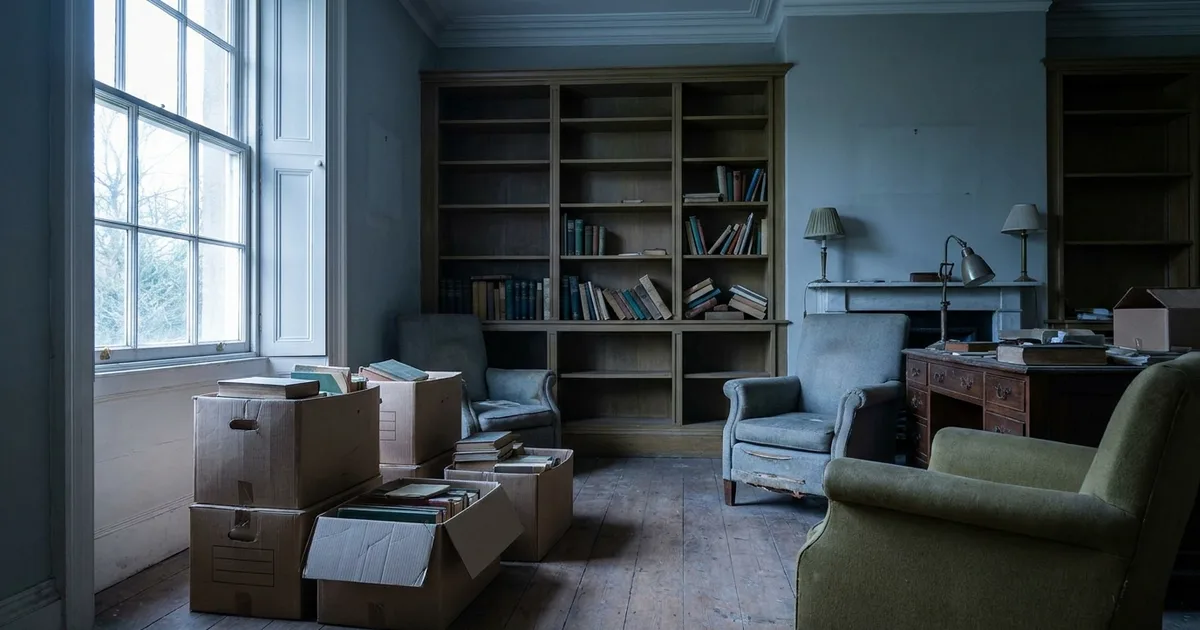
A quiet study with half-filled boxes of books and a partly emptied bookshelf.
Sorting a parent's library is part grief and part logistics, and there is no rush on either. The books will wait until you are ready.
When you are, the process is more straightforward than it looks. Keep the books that mean something to you, find the few that are worth money, and pass the rest on without guilt. Here is how to work through it.
The short answer
- Keep the books that matter to you first. That is the real value.
- Do not throw any out before sorting. Plain-looking books can be valuable.
- Find the few worth money: first editions, signed copies, fine condition, original dust jackets.
- Sell the valuable ones individually, and donate or bulk-sell the rest.
First, keep what you want
You do not have to monetize a parent's library. Before anything else, set aside the books that mean something: the inscribed copies in their handwriting, the ones you grew up with, the titles that were theirs. Those are worth more to you than any price, and no part of this process should pressure you to sell them.
Do not toss anything before you sort
The common and costly mistake is binning a dusty, plain-looking old book that turns out to be a valuable first edition. Collectible books rarely announce themselves on the spine. Sort everything first, then decide what goes. For a fuller walkthrough, see What to Do With a Box of Inherited Books.
Find the few that are worth money
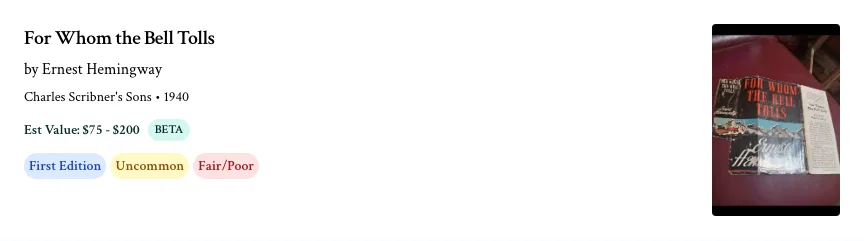
As you sort, flag anything that is a first edition, signed or inscribed by the author, in fine condition, still in its original dust jacket, or by a sought-after author. These are the books that can be worth real money.
Two things help you judge the flagged pile:
One honest note: an inscription from your parent to a family member is sentimental, not collector value. That does not make it worth less to you, it just will not raise the market price.
Sell the valuable ones, pass on the rest
Sell the flagged, valuable books individually to get a fair price. See Where to Sell Old and Rare Books. For the common majority, donating is often the easiest path: a local library, a Friends of the Library group, a school, or a charity shop will usually take them, sometimes with a tax receipt. The aim is to clear the room in a way that feels right, not to squeeze a dollar out of every book.
The faster way to know which is which
You should not have to become a book expert during a hard time.
FirstFolio is an AI tool that identifies and values old books from photos. You upload pictures of the cover, title page, and copyright page, and it identifies the edition and printing, grades the condition, and returns an estimated market value range in about 60 seconds. It tells you which of your parent's books are worth selling and which to donate.
You can check two books free, no card required. Find out what their books are worth.
When to get help
For a large library, or a single book that looks genuinely valuable and is heading to a sale or to insurance, a rare book dealer or a formal appraisal is worth the cost. See How to Get a Book Appraised.
Frequently asked questions
What should I do with my deceased parent's books? Keep the ones that mean something, find the few that are genuinely valuable, sell those individually, and donate or bulk-sell the rest.
How do I know if my parent's old books are valuable? Look for first editions, signed or inscribed copies, fine condition, and original dust jackets, then confirm the edition and check real sold prices.
Where can I donate my parent's books? Local libraries, Friends of the Library groups, schools, and charity shops commonly accept book donations, often with a tax receipt for larger gifts.
Is it worth selling inherited books? The valuable few are worth selling individually. The common majority is usually better donated or sold in bulk, since listing low-value books one by one costs more time than they return.
Related reading: