How to Spot a Book Club Edition
Book club editions look like first editions but sell for a few dollars. The tells: the blind stamp, the missing jacket price, the jacket code, and the cheaper build.
Robin Swain
Author
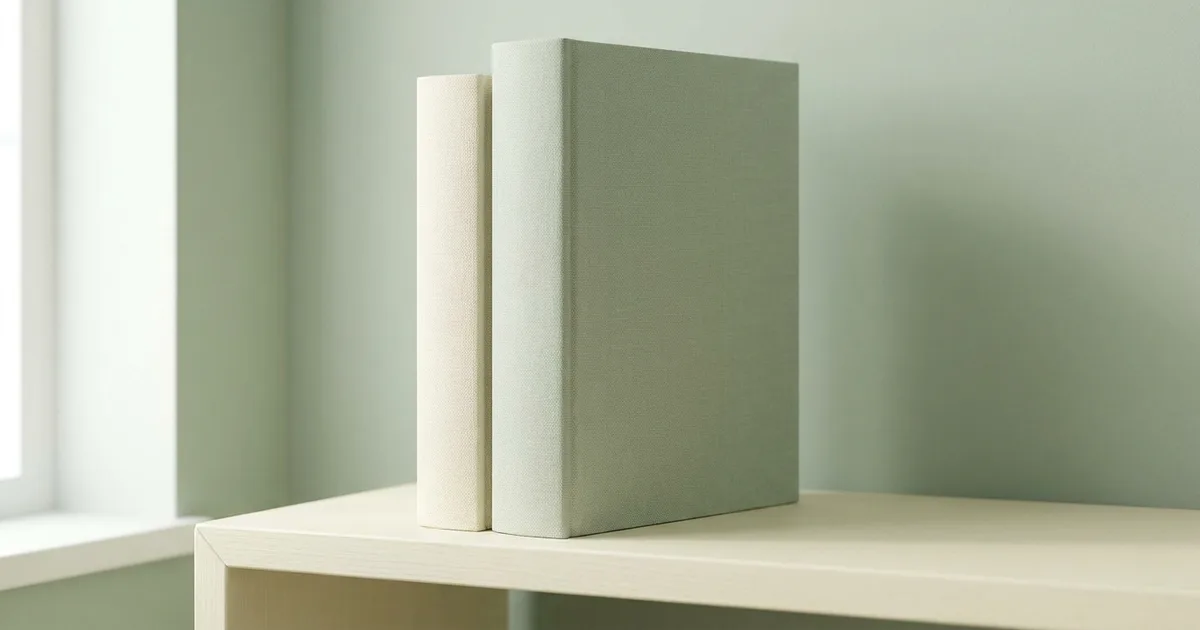
Two similar hardcover books standing side by side on a shelf, one smaller than the other.
You found a promising hardcover. The title page looks right, the copyright page even says "First Edition," and the jacket matches the pictures of the valuable one. Then a bookseller glances at it and says "book club" and the price collapses.
Book club editions are the most common false positive in book identification. They were printed by mail-order clubs like the Book-of-the-Month Club and the Literary Guild in enormous numbers, built to look like the trade edition, and they are worth a small fraction of it.
The good news is that they announce themselves once you know where to look.
The short answer
Check these, in order:
- The jacket flap price. No printed price on the inner front flap is the classic book club tell.
- The blind stamp. A small stamped dot, circle, square, or leaf pressed into the back cover near the lower right corner.
- The words. "Book Club Edition" printed on the jacket flap, or a club name on the copyright or title page.
- The jacket back panel. A five-digit number in a white box where the ISBN or barcode should be marks a Doubleday club printing.
- The build. Smaller, lighter, thinner boards, cheaper paper, no headbands, plain white endpapers.
Any one of these is usually enough. Two together settle it.
What a book club edition actually is
Mail-order book clubs licensed popular titles and printed their own editions for members, often from the same plates as the publisher's trade edition. Same text, same jacket art, sometimes even the words "First Edition" carried over on the copyright page. What differed was the manufacturing: cheaper paper, lighter boards, and no retail price, because the book was never meant for a bookstore shelf.
That is why they fool people. The book is not a fake. It is a legitimate edition of the right book, just not the one collectors pay for.
The big American clubs were the Book-of-the-Month Club, founded in 1926, and the Doubleday family of clubs: the Literary Guild, the Doubleday Book Club, the Mystery Guild, and the Science Fiction Book Club. Each left its own marks, and the marks changed over the decades, which is why you check several tells rather than one.
Tell 1: No price on the dust jacket
Trade hardcovers carry a printed price on the upper corner of the inner front flap. Book club jackets usually do not, because there was no retail price to print.
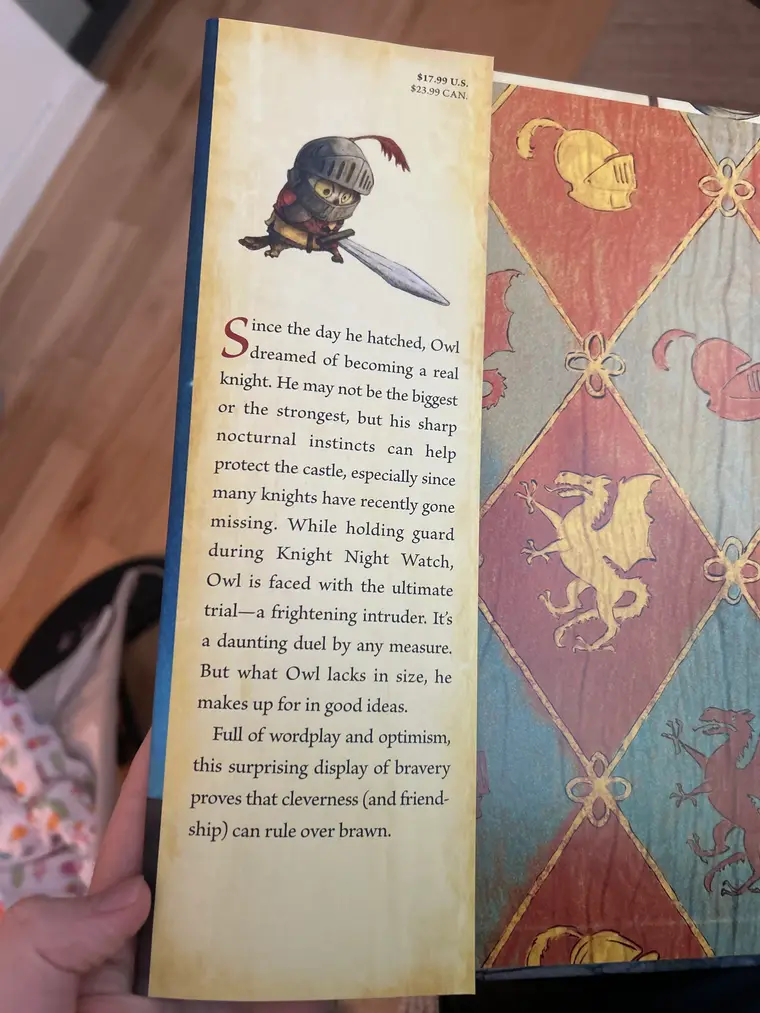
One caution in each direction. A missing price corner can also mean a price-clipped trade jacket, where someone cut the price off a real first edition, so look at whether the corner is absent versus cut. A clipped jacket has a small diagonal snip out of the flap corner and the paper edge is raw. A club jacket has a complete, uncut corner with nothing printed on it. And for a period in the 1970s some Book-of-the-Month Club jackets did carry prices, with "Selection of the Book-of-the-Month Club" printed on the flap instead. The flap text tells you either way. See Do Dust Jackets Affect a Book's Value? for how much the jacket itself matters.
Tell 2: The blind stamp on the back cover
Take the jacket off and look at the back board, near the lower right corner by the spine. Many club editions carry a blind stamp: a small circle, square, dot, star, or maple-leaf shape pressed into the cloth without ink. On some earlier Book-of-the-Month Club copies it is a small printed black dot instead.
It is subtle, and it is the single most decisive physical tell. Tilt the book against the light and run a finger over the corner. A trade edition has nothing there.
Two limits. Not every club used a blind stamp, and the Book-of-the-Month Club itself did not use one in every era, so a clean back corner does not clear the book by itself. Check the flap and the back panel too.
Tell 3: It says so, if you look
Some club editions state it outright: "Book Club Edition" printed at the bottom of the front jacket flap, which is the Doubleday clubs' habit, or the club's name on the title or copyright page. Others drop the publisher's price line but change nothing else. The absence of a statement proves nothing, but its presence ends the question.
Remember that the copyright page can still say "First Edition," because the club printed from the publisher's plates. This is a case where those words do not mean what they seem to. The number line has the same problem, see How to Read a Book's Number Line.
Tell 4: The five-digit code on the jacket back panel
Turn the jacket over. A trade jacket from the last few decades carries an ISBN and, after the early 1980s, a barcode. A Doubleday club jacket often carries a five-digit number instead, typically black numerals in a small white box, and no barcode at all. That number is the club's catalog code, and it is a reliable marker for Literary Guild, Doubleday Book Club, Mystery Guild, and Science Fiction Book Club printings.
Older jackets are less help here, since trade jackets before the 1970s carried no ISBN either. On those, the flap price and the blind stamp do the work.
Tell 5: The build feels cheaper
Put a club edition next to the trade edition and the difference is physical. The club copy is usually a little smaller, noticeably lighter, bound in thinner boards, and printed on cheaper paper that browns faster. The jacket stock is often thinner and uncoated. On its own this tell takes experience, which is why the flap price and the blind stamp come first. But once you have handled a few, the heft alone makes you check the back corner.
The small finishing details give it away too. Look for:
- No headbands. Those are the tiny strips of striped cloth at the top and bottom of the spine, inside the cover. Trade hardcovers usually have them. Club copies often skip them.
- Plain white endpapers where the trade edition has colored or decorated ones.
- No top stain. Many trade editions of the mid-century had the top edge of the pages colored. Club copies are usually left plain.
- Paper-covered boards imitating cloth, where the trade edition is real cloth, and less or no gilt on the spine.
- A ragged or fake deckled fore edge where the trade copy is trimmed clean, or the reverse.
None of these is conclusive alone. Together with an unpriced flap they are.
The gutter code: what it proves and what it does not
Doubleday printed a small code, one or two letters followed by a number, deep in the gutter of the last page of text, or occasionally another late page. It ran from roughly 1958 to 1987 and appears on both Doubleday's trade printings and its club printings. The letter stands for the year and the number for the week of that year.
So a gutter code does not by itself prove a book club edition. What it does is date the printing, which is often the only way to tell an early club printing from a later one, because club copies carry no printing statement. If you collect Science Fiction Book Club editions, or early Stephen King, the gutter code is the tool you will hear about most. For everyone else it is a supporting clue. The flap and the back panel come first.
Which club used which mark
A quick reference for the ones you will meet most:
- Book-of-the-Month Club (BOMC). Blind stamp on the back board in most eras, a small black dot on some earlier copies. Jacket without a price, except the 1970s "Selection of the Book-of-the-Month Club" jackets that carried one. Copyright page often identical to the trade edition.
- Literary Guild, Doubleday Book Club, Mystery Guild. "Book Club Edition" at the foot of the front flap, no price, a five-digit code on the back panel instead of an ISBN, and a gutter code on Doubleday-era printings. Noticeably smaller and lighter than the trade copy.
- Science Fiction Book Club (SFBC). Same Doubleday marks as above. Also the one club whose editions collectors sometimes want, see below.
- UK clubs: Book Club Associates (BCA), Readers Union, the Companion Book Club and others. These usually say so on the copyright page, in wording like "This edition published by Book Club Associates by arrangement with" the original publisher. A British hardcover with that line is a club edition, whatever the jacket looks like.
A real example: To Kill a Mockingbird
Harper Lee's novel is the textbook case. Lippincott published the trade first edition in 1960, and the Book-of-the-Month Club issued its own edition the same year with the same jacket art. Side by side on a shelf they look like the same book.
A true first in its jacket routinely sells for thousands of dollars, and strong copies reach five figures. The club copy sells for a few dollars to a few tens of dollars. The whole difference sits in a blind stamp on the back board and a missing price on the flap. Anyone pricing a Mockingbird from the jacket alone is guessing.
The same pattern holds for most collected twentieth-century fiction. Gone with the Wind, The Catcher in the Rye, Steinbeck, Hemingway, early King and Grisham: all of them exist in club printings that outnumber the trade firsts many times over, and all of them turn up described as "first edition" by sellers who did not check the back cover.
Other reprints that fool people the same way
Book clubs are not the only source of lookalikes. Reader's Digest Condensed Books are abridgements bound to look like handsome hardcovers and are worth essentially nothing to collectors. Reprint houses like Grosset & Dunlap reissued popular novels in cheaper editions, often with the original publisher's plates and their own name on the spine and title page. Later trade printings from the original publisher also share the jacket art. The habit is the same in every case: read the title page, the copyright page, and the flap, not the cover.
What a book club edition is worth
Honestly: usually a few dollars. They were printed by the hundreds of thousands, so rarity never enters the picture.
There are exceptions, and they are narrow. The Science Fiction Book Club issued hardcovers of many novels that had only ever appeared as paperbacks, which makes the club copy the first hardcover edition, and it published omnibus volumes that exist in no other form. Collectors in that field pay real money for some of those. A club copy of a book whose trade first is impossibly expensive can also sell as a reading copy with the right look. But these are the exceptions that prove the rule. The safe default is reading copy money, and a seller who describes a club edition as a first edition is either mistaken or hoping you are.
The flip side is worth stating too. If your copy passes these checks, no blind stamp, priced jacket, ISBN or barcode on the back panel, trade-size build, you may be holding the real thing, and the next step is confirming the printing. Start with How to Tell If a Book Is a First Edition. If it does turn out to be the trade first, Where to Sell Old and Rare Books covers what to do next.
Why a barcode scanner app will not catch this
A lot of people reach for a book scanner app first. It will not help here. Most club editions have no barcode to scan, and books from before about 1970 have no ISBN at all. Even when a club jacket does carry an ISBN, it is the same number the publisher used on the trade edition, so a barcode lookup returns the title and a used-book price and says nothing about which printing you hold. The difference between a club copy and a trade first lives in the flap, the back board, and the copyright page, none of which a barcode encodes. FirstFolio is an AI tool that identifies and values old books from photos, and it works from those pages rather than a barcode. We wrote up the comparison in FirstFolio vs barcode scanner apps.
The faster way to check
With FirstFolio you upload pictures of the cover, title page, and copyright page, and it identifies the edition and printing, grades the condition, and returns an estimated market value range in about 60 seconds, including whether what you have is the trade first or a club printing. Add a photo of the back board and the jacket flap and it has the same evidence a bookseller would check.
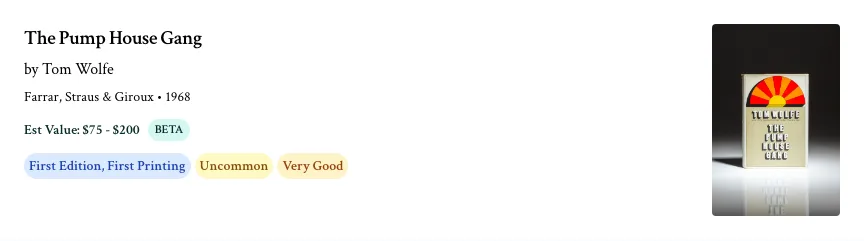
You can check two books free, no card required. Find out which edition you have.
Frequently asked questions
How can I tell if a book is a book club edition? Check the inner front jacket flap for a missing printed price, and the lower right corner of the back cover for a small blind stamp (a dot, circle, square, or leaf pressed into the cloth). Then check the jacket back panel for a five-digit number in place of an ISBN or barcode. Any one is a strong tell; two together settle it.
Are book club editions worth anything? Usually only a few dollars. They were printed in huge numbers on cheaper materials, so collectors pay little for them. The main exceptions are Science Fiction Book Club editions that were the first hardcover appearance of a paperback original.
Why does my book club edition say "First Edition"? Clubs often printed from the publisher's plates, so the copyright page text carried over. On a club printing those words do not indicate the collectible trade first.
What is a blind stamp on a book? A small mark pressed into the back cover cloth without ink, usually near the lower right corner. Book clubs used it to mark their editions. Shapes include a dot, circle, square, star, and maple leaf.
Do all book club editions have a blind stamp? No. The Book-of-the-Month Club used one in most eras, but not all, and the Doubleday clubs relied more on the flap wording and the back-panel code. A clean back corner does not clear a book on its own.
What is a gutter code? A short letter-and-number code Doubleday printed in the gutter of a late page, roughly 1958 to 1987, on both trade and club printings. It dates the printing but does not by itself prove a club edition.
Is a Literary Guild edition a first edition? No. The Literary Guild was a Doubleday book club, and its editions are club printings made after the publisher's trade edition. They usually say "Book Club Edition" on the front flap and carry a five-digit code on the back of the jacket.
How do I tell a book club edition from a price-clipped jacket? Look at the flap corner. A clipped jacket has a small diagonal cut with a raw paper edge where the price was. A club jacket has a complete corner with nothing printed on it. Then confirm with the back board and the back panel.
Does a book club edition have an ISBN? Often not. Many club jackets carry a five-digit club code instead of an ISBN, and books from before about 1970 have no ISBN at all. When an ISBN is present it usually matches the trade edition, so it cannot distinguish the two.
Is a book club edition a fake? No. It is a legitimate licensed edition of the same text. It is just a mass-produced printing that collectors value far below the publisher's trade first edition.
Related reading: